How to Choose Wax for Sensitive Skin
Sensitive skin usually tells you right away when a wax is wrong. You see redness that lingers too long, feel extra heat during removal, or end up with post-wax bumps that make the whole service feel like a mistake. If you are wondering how to choose wax for sensitive skin, the answer is not just “pick the gentlest one.” It means matching the wax to the skin condition, the body area, the hair type, and the way the product is used.
That matters whether you are a beauty professional buying for repeated client services or a home user trying to get salon-level results without unnecessary irritation. Professional-grade wax can be an excellent choice for delicate skin, but only when the formula and application method make sense for the treatment.
How to choose wax for sensitive skin by area
The first mistake most buyers make is treating all sensitive skin the same. Facial skin, underarms, legs, and intimate areas react differently. A wax that feels comfortable on larger body areas may be too aggressive for the upper lip or bikini line.
For the face and intimate zones, hot wax is often the better option. It adheres more to the hair and less aggressively to the skin than many strip wax systems, which can make removal more controlled on delicate areas. For legs, arms, or back, a high-quality roll-on or strip wax can still work well, especially when the skin is not compromised and the hair pattern is more uniform.
Underarms sit in the middle. The skin is sensitive, but the hair is often coarse and grows in different directions. In that case, a flexible hot wax designed for strong hair and delicate skin usually performs better than a standard strip wax.
The best wax types for sensitive skin
Choosing the right category is the fastest way to narrow the field. Not every wax system is built for the same client, same area, or same tolerance level.
Hot wax
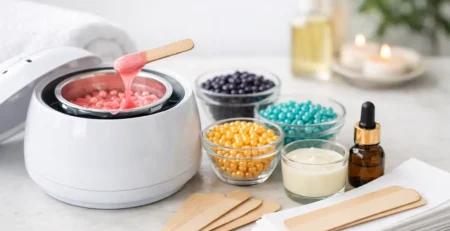
Hot wax is a strong option for sensitive skin because it is typically removed without strips and can be more selective in gripping hair. This can reduce repeated pulling on the same area, which is one of the biggest triggers for irritation. It is especially useful for intimate waxing, facial waxing, and underarms.
The trade-off is technique. Hot wax needs the correct temperature, consistency, and application thickness. In professional settings, that is a clear advantage because trained users can get precise results. At home, it can still work very well, but it requires more attention than a simple cartridge system.
Strip wax and roll-on wax
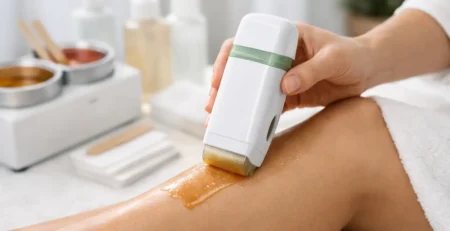
Strip wax is efficient, fast, and practical for larger areas. Roll-on cartridges are especially useful for beauty professionals and home users who want cleaner, more even application. For sensitive skin, the key is choosing a formula made for delicate skin rather than assuming all strip waxes behave the same way.
The downside is that strip wax generally grips the skin more than hot wax does. On healthy skin and broad areas like legs, that may be perfectly acceptable. On reactive skin or smaller, high-friction zones, it can be too much.
Sugar paste
Sugar paste is often recommended for sensitive skin because of its simpler ingredient profile and gentle removal feel. Many users tolerate it very well, especially when they react to heavily fragranced or resin-heavy formulas. It can be a smart choice for both professionals and consumers who want a more skin-conscious hair removal routine.
Still, sugar is not automatically ideal for everyone. It behaves differently from wax, and results depend heavily on technique, room temperature, and hair length. If speed and consistency are the top priorities in a salon setting, a premium professional wax may still be the better commercial fit.
Ingredients matter more than marketing claims
When learning how to choose wax for sensitive skin, ingredient awareness is more useful than front-label language. Terms like “gentle,” “soft,” or “for delicate skin” can be helpful, but they are not enough on their own.
Look for formulas designed to minimize irritation, especially those with soothing components such as chamomile, aloe vera, titanium dioxide, or similar calming agents commonly used in waxing cosmetics. Titanium dioxide is often valued in sensitive-skin waxes because it can help create a creamier texture and a softer feel during removal.
At the same time, be cautious with strong fragrance, unnecessary dyes, or ingredient blends that have irritated your skin before. Sensitive skin is not always dry skin, and it is not always allergy-prone skin. Some people react to heat, some to adhesion strength, and some to certain additives. The best buying decision comes from understanding your actual trigger.
Texture, flexibility, and pull strength
A high-quality wax for sensitive skin should not just sound gentle. It should behave in a more controlled way during treatment. That means smooth spreadability, even setting, and clean removal without crumbling or forcing repeated passes.
Flexible film waxes are often a strong fit because they adapt better to body contours and can remove coarse hair with less stress on the skin. Cream waxes are also popular for delicate skin because they tend to feel softer than very transparent, high-adhesion formulas.
If a wax requires multiple applications on the same patch to remove hair, it is usually not the right formula for sensitive skin. Reworking an area is where a lot of irritation starts. In professional buying, this is not just a comfort issue. It affects service quality, speed, and client retention.
Temperature control is part of the choice
The wrong temperature can make even a good wax feel harsh. Sensitive skin reacts quickly to overheating, so selecting a wax that performs well at a stable, manageable temperature is important.
This is one reason professional systems matter. A reliable wax heater and a formula designed for consistent performance reduce the chance of burning sensation, uneven texture, and over-application. For home users, this is especially important. Buying professional-grade wax without proper heating control can cancel out the benefits of the formula itself.
If you wax regularly, it makes sense to treat the heater as part of the skin-sensitivity decision, not as a separate accessory.
Pre- and post-wax care change the result
Even the best wax will underperform on poorly prepared skin. Sensitive skin needs a clean surface, light pre-wax preparation, and targeted aftercare. Heavy oils before waxing can interfere with adhesion, while harsh scrubs too close to the appointment can leave skin reactive before the wax is even applied.
A professional pre-wax cleanser or skin prep solution helps remove residue without making the area too dry. After waxing, a calming lotion, gel, or post-depilatory oil can reduce leftover stickiness and help skin settle faster. This step is not optional if sensitivity is already an issue.
For salons, offering a full pre- and post-wax system creates more consistent results across clients. For home users, it is one of the simplest ways to move from basic hair removal to a more professional routine.
How to test a wax if your skin reacts easily
If your skin is highly reactive, avoid changing everything at once. Test one wax formula on a small area first and watch both the immediate reaction and the skin’s condition over the next 24 hours.
Pay attention to more than redness. Notice whether the skin feels hot for too long, whether bumps appear later, or whether the area becomes unusually dry or tight. Sometimes a wax looks fine right after removal but causes delayed irritation. That is still a sign the formula or method is not the right fit.
Professionals should take the same approach with new salon stock, especially when introducing products for intimate or facial waxing services. Reliable performance on sensitive clients is a purchasing advantage, not a minor detail.
What professionals and home users should prioritize
For professionals, the best wax for sensitive skin is usually the one that combines dependable hair removal, low skin stress, and fast service compatibility. Product quality matters, but so does consistency from batch to batch, clean application, and strong value in repeated use. Made in Italy professional waxing products are often chosen for exactly this reason – they combine specialist manufacturing with service-level performance.
For home users, ease of use matters just as much as formula quality. If a wax is technically excellent but difficult to handle, overheating easily, or messy to remove, the risk of irritation goes up. A simpler system with controlled performance may deliver better real-world results.
AmicaMia Shop focuses on this professional-meets-accessible space, where salon-grade waxing solutions and treatment support products help both businesses and home users choose with more confidence.
The right wax for sensitive skin should leave you thinking about the result, not the discomfort. Start with the body area, choose a formula built for delicate skin, and give just as much attention to temperature and aftercare as you do to the wax itself.